
Blog · By the Westminster Express Plumbing Team · Published 2026-09-25
Galvanized Pipes in Westminster Homes: Warning Signs
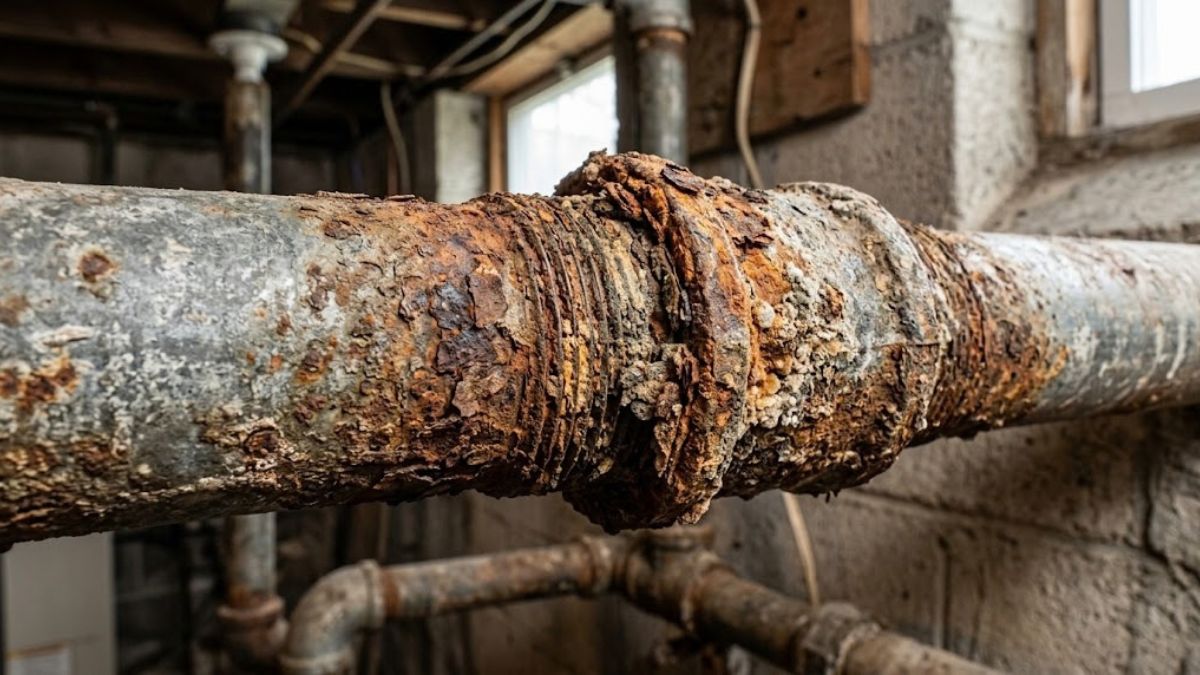
If your Westminster home was built before the early 1980s and still has its original supply lines, there's a real chance some of that plumbing is galvanized steel, and the clearest warning signs are low water pressure, rust-colored water from the hot side, and pipe leaks that keep showing up in a new spot every year or two.
Why Galvanized Pipe Was Ever Used
Galvanized steel pipe, essentially steel coated in zinc to resist corrosion, was the standard residential supply line material through roughly the 1960s and into the 1970s, before copper and later PEX became the norm.
A meaningful share of Westminster's older housing, especially the neighborhoods that grew up around the original DeSpain-era core near West 76th Avenue, still has some or all of that original galvanized supply line in service today, decades past what the material was ever expected to last.
How Galvanized Pipe Actually Fails
The zinc coating that protects galvanized steel wears away from the inside over decades, and once it's gone, the steel underneath starts corroding directly, which narrows the pipe's interior diameter with rust and mineral buildup.
That narrowing is why declining water pressure is often the first sign, well before an actual leak develops. By the time a leak shows up, the pipe has usually been corroding for years already.
What to Check in Your Own Home
Look at any exposed supply line in a basement, crawl space, or utility closet. Galvanized pipe is a dull gray color and, unlike copper, will attract a magnet, a simple test that takes ten seconds and tells you a lot.
If you've noticed brownish or rust-tinted water specifically from hot water taps, that's another strong indicator, since hot water sits in the tank and lines longer and shows corrosion faster than cold.
Repair, Replace, or Wait
A single isolated leak in an otherwise sound galvanized system is usually worth a straightforward repair. Two or more unrelated leaks within a couple of years is the point where a full repipe, replacing the galvanized lines with PEX or copper, becomes the more cost-effective choice over repeated patch repairs.
We camera-check accessible sections and walk homeowners through real numbers for both paths before recommending one over the other.
What a Real Galvanized Pipe Call Looks Like
A typical call starts with a homeowner noticing the shower has gone from a strong stream to barely a trickle over the course of a year or two, gradually enough that it wasn't obvious until a guest mentioned it. That slow decline, rather than a sudden drop, is the classic galvanized pipe signature.
By the time we're called, the pipe has often been narrowing for a decade or more. We camera-check what's accessible, confirm the material, and give a straight answer about whether the rest of the system is likely following the same pattern or whether this is an isolated section.
DIY Checks vs. When to Call
Checking whether exposed pipe is magnetic and dull gray is something any homeowner can safely do in five minutes. Testing water pressure at different fixtures and comparing them is also a reasonable DIY step that helps build the picture before calling anyone.
What isn't a DIY job is diagnosing how much of the system has corroded, or deciding between a spot repair and a full repipe. That decision needs a camera inspection and someone who's seen enough of Westminster's older housing stock to know what's typical for a given construction era.
Insurance and Resale Considerations
Most homeowner policies don't cover the preventive replacement of aging galvanized line, since gradual corrosion is treated as maintenance rather than a covered loss. Coverage typically only kicks in once a pipe actually fails and causes sudden damage, which is a real argument for addressing known galvanized line proactively rather than waiting for a failure that triggers a claim but also means a flooded room first.
On resale, a documented, permitted repipe is a genuine selling point, while original galvanized supply lines discovered during a buyer's inspection can slow or complicate a sale, sometimes becoming a negotiating point that costs more in a price concession than the repipe itself would have.
How We Assess a Galvanized System
We start any galvanized pipe assessment at the main shutoff, checking pressure and flow there before moving to individual fixtures, since a whole-house pressure drop points toward a systemic problem while an isolated low-pressure fixture often means something more localized.
From there we check every accessible section of exposed pipe, noting material, visible corrosion, and any prior repair patches, which tells us how much of the system has already been touched and how much original galvanized line likely remains hidden behind walls or under the slab.
That assessment, plus a homeowner's own history of past leaks, is what we use to give an honest recommendation, repair the immediate issue and monitor, or move toward a full repipe conversation, rather than defaulting to the most expensive option out of caution.
If you're not sure whether this applies to your home, the fastest way to find out is a quick visual check of any exposed pipe you can access, paired with a call if you see the warning signs above. We're glad to do a full assessment either way, and there's no pressure toward a full repipe if a targeted repair genuinely is the better fit for your specific situation.
That said, don't panic if your home has galvanized pipe and no symptoms yet. Plenty of Westminster homes run original galvanized line for years without a major issue, and the goal here is informed awareness, not urgency for its own sake.
Typical signs by pipe age
| Pipe age | Common symptom |
|---|---|
| 40-50+ years | Rust-colored hot water, visibly narrowed flow |
| 50-60+ years | Recurring pinhole leaks at fittings and joints |
| 60+ years | Frequent pressure loss, multiple simultaneous leak points |
FAQ
How can I tell if my pipes are galvanized without cutting into a wall?
Check any exposed pipe in a basement or crawl space. Galvanized steel is dull gray and magnetic, while copper is reddish-brown and PEX is flexible plastic, usually red, blue, or white.
Does homeowners insurance cover galvanized pipe replacement?
Most policies cover sudden, accidental damage like a burst pipe, but not the preventive replacement of aging galvanized line itself, since that's considered maintenance rather than a covered loss. Check your specific policy for the exact terms.
How long does a full repipe take?
Most single-family homes take 2 to 4 working days, with water restored to at least part of the house each night rather than the whole home going without water for the full job.
Is it worth repiping a home I'm about to sell?
It depends on the timeline and the inspection findings, but a documented, permitted repipe can be a genuine selling point on an older home, versus a buyer discovering original galvanized line during their own inspection.
"Real answers, then a real plumber if you need one."☎ Call (303) 552-3896