
Blog · By the Westminster Express Plumbing Team · Published 2026-09-25
Garbage Disposal Won't Turn On? What to Check First
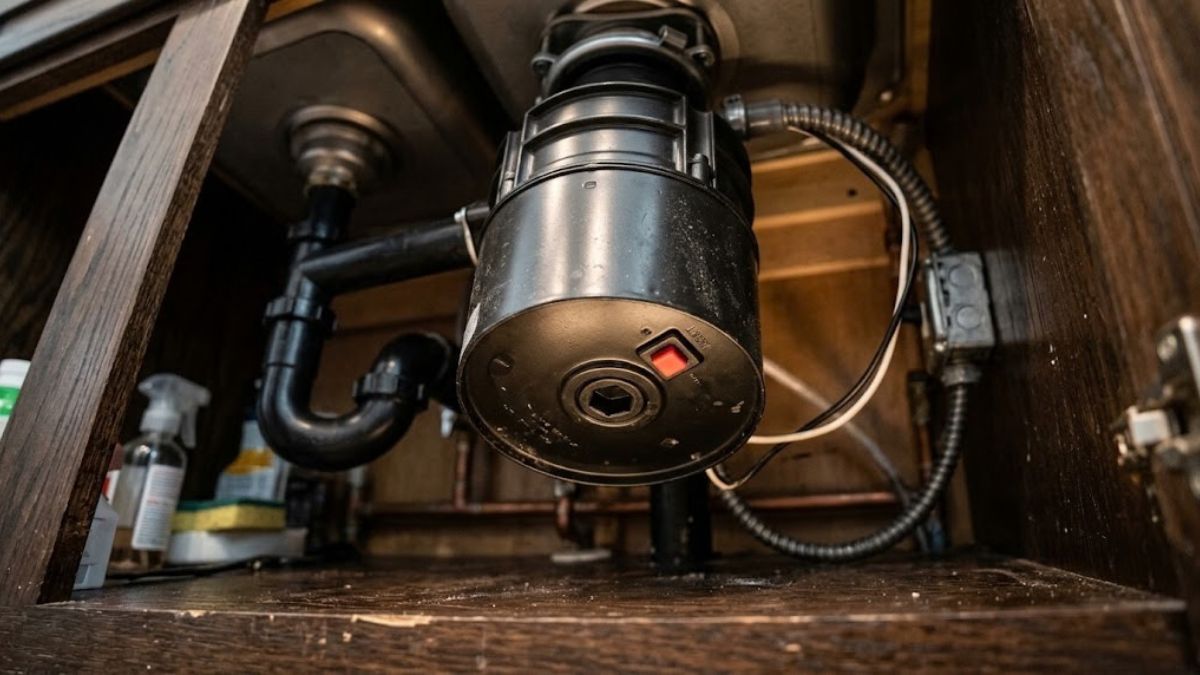
A garbage disposal that hums but doesn't spin is almost always jammed, not burned out, and often clears with the reset button and a manual turn of the flywheel from underneath using an Allen wrench. A disposal that's completely silent with no hum at all is more likely an electrical issue worth checking before assuming the unit needs replacing.
First: Check the Reset Button
Most disposals have a small red or black reset button on the bottom of the unit. If the motor overheated or jammed, this button pops out automatically. Press it firmly. If it clicks back in, try the switch again.
Second: Try the Manual Turn
Most disposals also have a hex-shaped hole on the bottom, designed for a standard Allen wrench, that lets you manually rotate the flywheel to work through whatever's jamming it. Turn it firmly in both directions a few times, then try the reset button and switch again.
Third: Check the Breaker and Outlet
A disposal that's completely silent, no hum, no sound at all, points toward an electrical issue rather than a mechanical jam. Check the breaker panel for a tripped breaker, and if the disposal plugs into an under-sink outlet, confirm that outlet has power using another device.
When It's Time to Call
If the reset button and manual turn don't resolve a jam, or if there's a burning smell, visible leaking from the unit's housing, or it trips the breaker repeatedly even after a reset, those are signs the motor or seal has actually failed rather than a simple jam, and it's time to call rather than keep trying.
A Real Troubleshooting Call
A homeowner called convinced their disposal was completely dead after multiple attempts to turn it on produced nothing. A quick check found a tripped breaker, unrelated to the disposal itself, another appliance on the same circuit had overloaded it. The disposal worked fine once the breaker was reset.
That's a common enough scenario that checking the breaker panel is genuinely worth doing before assuming the disposal itself has failed, since it costs nothing and takes under a minute.
When Replacement Is the Right Call
A disposal that's jammed repeatedly even after clearing it, is leaking from the housing, or is simply over a decade old and showing its age is usually a better replacement candidate than another round of troubleshooting, given how affordable a new unit is relative to the labor involved either way.
Extending Your Disposal's Lifespan
Running cold water for a few seconds before and after using the disposal helps flush debris through completely rather than letting it settle and cause buildup over time. Avoiding hard items, bones, fruit pits, fibrous vegetable scraps, reduces the mechanical strain that leads to premature jams and motor wear.
A disposal that's occasionally run with a few ice cubes can help dislodge minor buildup on the blades, a simple, low-cost maintenance habit that meaningfully extends a unit's working life between service calls.
A Full Troubleshooting Sequence
Start with the reset button, then the manual turn with an Allen wrench, then the breaker panel, then the outlet itself if the unit plugs in separately rather than hardwiring. Working through these in order, rather than jumping around, is the fastest way to isolate the actual cause.
If all of these check out and the disposal still won't run, listen closely for any sound at all when you flip the switch. A faint hum means the motor is receiving power but can't turn, still likely a jam. Complete silence with confirmed power at the outlet points toward an internal electrical failure that needs professional repair.
Document what you find, no hum vs. humming, reset button popped vs. not, before calling, since that information helps us bring the right diagnosis and likely parts on the first visit rather than needing to start troubleshooting again from scratch once we arrive.
Most disposal problems really are simple jams that clear with the reset button and a manual turn, so it's always worth trying those two steps before assuming the worst. When it genuinely is a failed motor or seal, replacement is affordable enough that it's rarely worth extensive repair attempts on an older unit anyway.
One more thing worth checking: some disposals are wired through a wall switch separate from the unit itself, and that switch can fail independently of the disposal's own components. If everything else checks out, a quick test with a non-contact voltage tester at the switch, or simply having an electrician confirm it's functioning, rules out one more possibility before assuming the disposal itself needs replacing.
Keep the Allen wrench that typically comes with a disposal, or a standard one that fits, somewhere accessible near the unit rather than in a general toolbox that might take time to locate during the moment you actually need it. That small bit of preparation turns a five-minute fix into an immediate one.
Most of the time, the fix really is this simple, and calling a plumber for a jammed disposal that just needed its reset button pressed is a common, understandable, and entirely avoidable expense once you know the sequence to try first. Keep this checklist handy for next time, since disposal jams tend to recur in the same households more than people expect, especially ones that use the disposal heavily for everyday food prep.
A few minutes of troubleshooting almost always beats an unnecessary service call for something this fixable on your own, and it costs nothing but a little patience to work through the sequence properly first.
Symptom to likely fix
| Symptom | Likely issue |
|---|---|
| Humming, doesn't spin | Jam (try reset + manual turn) |
| Completely silent | Electrical (check breaker/outlet) |
| Leaking from housing | Seal failure (needs replacement) |
FAQ
What causes most garbage disposal jams?
Fibrous produce like celery and corn husks, along with potato peels, cause more jams than people expect, more than bones or harder scraps that are usually assumed to be the problem.
Is it safe to reach into a jammed disposal?
Never put your hand into the disposal, even when it's unplugged. Use the manual turn tool (Allen wrench) from underneath, or long tongs from the top, to clear visible debris.
Why does my disposal keep tripping the breaker?
A motor that's struggling against a persistent jam, or a failing motor itself, can draw enough current to trip a breaker repeatedly. If it happens after a proper reset and manual clear, the motor likely needs professional attention.
How long do garbage disposals typically last?
A standard disposal usually lasts 8 to 12 years with normal use. Frequent jams or leaking well before that timeframe usually mean it's worth replacing rather than continuing to repair.
"Real answers, then a real plumber if you need one."☎ Call (303) 552-3896