
Blog · By the Westminster Express Plumbing Team · Published 2026-09-25
Hydro Jetting vs. Drain Snaking: Which Do You Need?
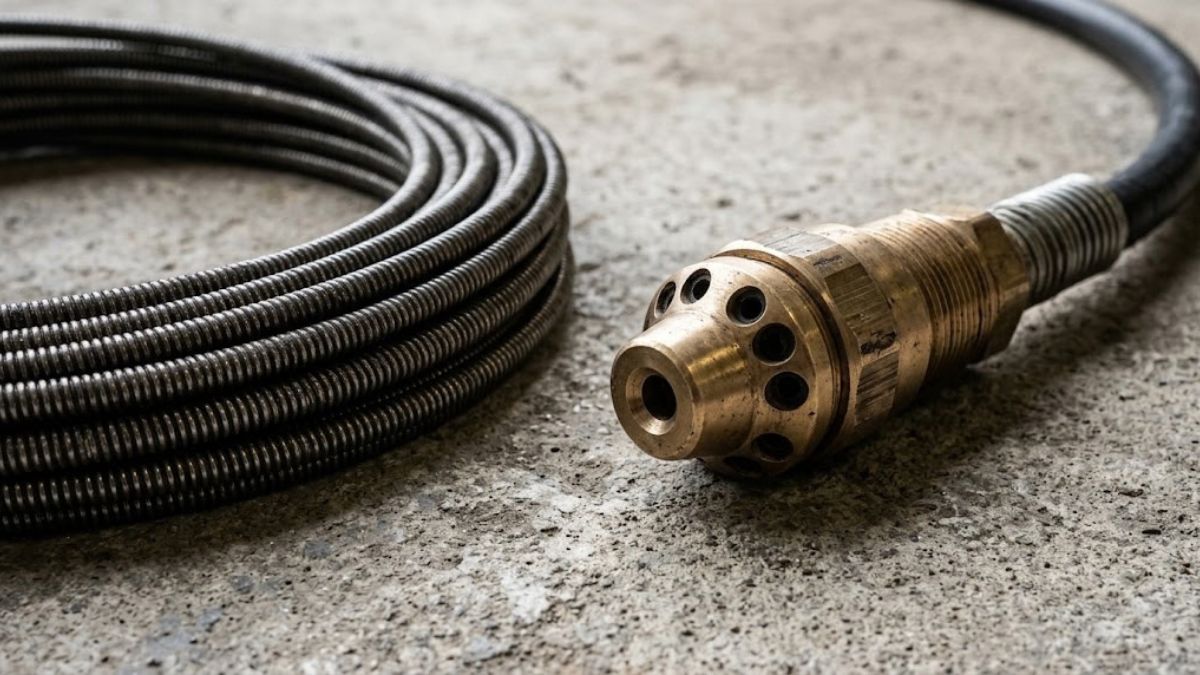
Drain snaking clears a specific blockage by cabling through it, which works well for a single-fixture clog like a slow sink or tub. Hydro jetting uses high-pressure water to scour the entire interior of a pipe clean, which is the better call for a recurring clog, grease buildup, or confirmed root intrusion in a main line.
How Each Method Actually Works
A drain snake, or cable, is a flexible metal cord fed through the pipe that either breaks up or hooks and pulls out whatever's blocking the line. It's fast, effective for a localized clog, and the standard first response for most single-fixture backups.
A hydro jet uses pressurized water through a specialized nozzle to blast the pipe's entire interior surface clean, removing grease, scale, and root hairs along the full length of the line, not just punching a path through the immediate blockage.
Why a Cable Sometimes Isn't Enough
A cable clears whatever's directly blocking the pipe at that moment, but it leaves the rest of the buildup, grease film, root hairs, scale, coating the interior walls, which is exactly what the next clog builds on. That's why some clogs return within weeks of being cabled clear.
When Jetting Is the Right Call
A line with a documented history of grease buildup, a main line with confirmed root intrusion from a camera inspection, or any drain that's clogged more than once in the same spot within a short window are all strong candidates for jetting over another round of cabling.
When Jetting Isn't the Right Call
A pipe that's already cracked, significantly offset, or partially collapsed shouldn't be jetted at full pressure, since that can worsen existing damage rather than clean it. This is exactly why a camera inspection should come before jetting on any line with an uncertain history.
A Real Before-and-After Comparison
A kitchen line that had been cabled clear three times in eighteen months, always returning within a few weeks, was finally jetted after a camera inspection confirmed heavy grease buildup along the full run, not just at the point where the cable had been breaking through.
Post-jetting camera footage showed a fully clean pipe wall, and that same line hasn't needed service since, a clear illustration of why treating the symptom repeatedly costs more over time than addressing the actual buildup once.
Cost Over Time: Cabling Repeatedly vs. One Jetting Visit
Three cabling visits at roughly $200 each adds up to $600 with the problem still unresolved. A single jetting visit at $400 to $700, informed by a camera inspection, often resolves the same recurring issue in one visit, which is the real math worth considering on any line with a repeat history.
What to Ask a Plumber Before Choosing
Ask whether a camera inspection is included before jetting, since jetting without first confirming the pipe's condition is a real risk on an older or unknown line. Ask what pressure setting will be used and whether it's calibrated to your specific pipe material and diameter, since one setting doesn't fit every situation.
A plumber who recommends jetting without ever mentioning a camera inspection first, on a line with an uncertain history, is a reasonable reason to ask more questions before agreeing to the service.
Our Standard Process for a Recurring Clog
For any line with a history of repeat clogs, we start with a camera inspection rather than jumping straight to either cabling or jetting, since the footage tells us definitively what we're dealing with, grease, roots, scale, a structural issue, before we commit to a method.
If jetting is the right call, we calibrate pressure and nozzle type to the specific pipe material and condition shown in the footage, rather than using one standard setting for every job, which matters most on older or more fragile pipe.
After jetting, we run the camera through again to confirm the line is genuinely clear along its full length, not just clear enough that water is flowing again, which is the real difference between a lasting fix and a temporary one.
Neither method is inherently better in every situation, and a plumber who always defaults to one regardless of the actual problem isn't giving you the right answer for your specific line. A camera inspection first is what makes the choice between them an informed one rather than a guess.
Cost aside, there's also a time-value consideration worth factoring in. Three separate cabling visits over several months means three separate scheduled appointments, three separate waits for a technician, and three separate disruptions to a household's routine, compared to resolving the same underlying problem in a single, more thorough visit.
If you're genuinely unsure which service your situation calls for, that uncertainty itself is a reasonable enough reason to start with a camera inspection rather than guessing at either method. It's a relatively small cost that removes the guesswork entirely and points directly to the right fix.
Both methods have their place, and the right answer genuinely depends on what's actually happening inside a specific pipe, not a general preference for one over the other. That's the whole reason a camera inspection matters more than the method itself, and it's worth insisting on regardless of which plumber you call or how confident they sound on the phone.
When in doubt, ask for the camera footage yourself before agreeing to either service, and ask what specifically in that footage is driving the recommendation, not just which method is being proposed. A plumber confident in the diagnosis will walk you through it happily.
Cabling vs. jetting
| Situation | Better fit |
|---|---|
| Single slow sink or tub | Cabling |
| Recurring clog in the same spot | Jetting |
| Confirmed grease buildup or root intrusion | Jetting |
FAQ
Is hydro jetting safe for older pipes?
It depends on the pipe's actual condition, not its age alone. A camera inspection first tells us whether the line can handle the pressure or whether a section needs repair before jetting.
How much does hydro jetting cost compared to snaking?
Standard drain cleaning runs $150 to $300. Hydro jetting typically runs $400 to $700 for a residential line, reflecting the more thorough result and specialized equipment involved.
How often should a line be jetted as maintenance?
A line with a documented history of grease buildup or root intrusion often benefits from jetting every 1 to 2 years as preventive maintenance rather than waiting for a full clog to develop again.
Can I request jetting instead of a cable on a first visit?
Yes, though we'll usually recommend a camera inspection first on any line without a known history, since jetting a structurally compromised pipe at full pressure isn't the right call.
"Real answers, then a real plumber if you need one."☎ Call (303) 552-3896