
Blog · By the Westminster Express Plumbing Team · Published 2026-09-25
Tankless vs. Tank Water Heaters in Westminster, CO
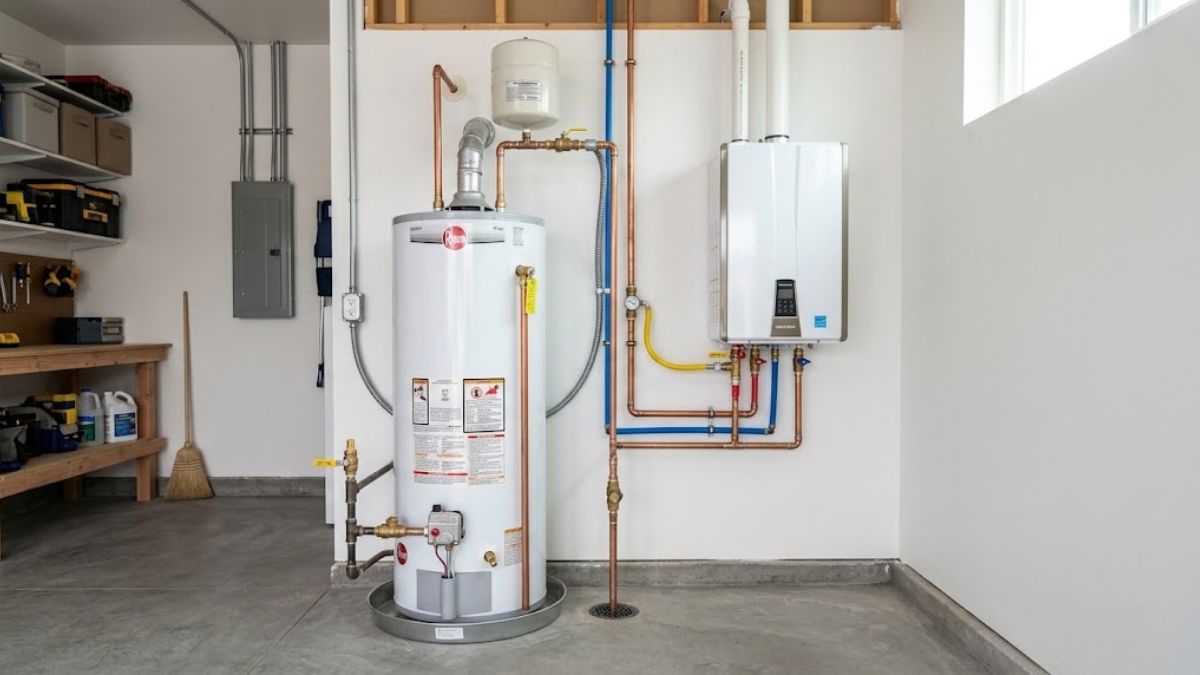
A standard tank water heater costs less upfront and installs faster, while a tankless unit costs more initially but lasts longer and provides continuous hot water. For most Westminster homes, the decision comes down to household hot water demand, available space, and whether the existing gas line and venting already support a tankless setup.
How They Actually Work
A tank water heater keeps 40 to 50 gallons of water heated and ready at all times, which means it can run out during high-demand periods, back-to-back showers, for instance, and starts reheating from scratch once emptied.
A tankless unit heats water on demand as it flows through, providing continuous hot water without a storage limit, but its output rate is limited, so running multiple hot-water fixtures simultaneously can still stretch its capacity.
The Hard Water Factor
Westminster's water, delivered through Westy Water and largely sourced from Clear Creek, runs hard enough that it's a genuine factor in this decision. A tank water heater handles mineral buildup by developing sediment at the bottom, which a periodic flush manages.
A tankless unit is more sensitive to hard water since scale builds up in its narrow internal passages, which is why annual descaling isn't optional here the way it might be in a softer-water city.
Cost Comparison Over Time
A tank costs less to buy and install but typically lasts 8 to 12 years and uses more energy maintaining a standing reserve of hot water around the clock. A tankless unit costs more upfront, generally $2,500 to $3,800 installed versus $1,400 to $2,200 for a tank, but lasts 15 to 20 years with proper maintenance and uses less energy overall since it's not heating water it isn't using.
Which Fits Which Household
A smaller household with modest hot water demand and a tight installation budget often does fine with a standard tank. A larger household, or one that's frequently run out of hot water with an existing tank, tends to benefit most from tankless, along with anyone doing a remodel anyway, since the rough-in for a larger gas line or dedicated venting is easier to handle during other work.
A Real Household Comparison
A family of five that regularly ran out of hot water with their old 40-gallon tank switched to a tankless unit during a bathroom remodel, when the wall was already open anyway. They report never running out since, even with three showers happening close together, which is the exact scenario a tank struggles with.
A retired couple in a smaller, older home stuck with a straightforward tank replacement instead, since their hot water demand never stretched a standard tank's capacity and the lower upfront cost mattered more to them than the tankless unit's longer lifespan.
The Maintenance Commitment Question
Before choosing tankless, it's worth being honest about whether annual descaling will actually happen. A tankless unit that's never maintained in Westminster's hard water underperforms within a few years, sometimes worse than a well-maintained tank would over the same period.
If you're not confident you'll keep up with annual service, either commit to a maintenance plan upfront or lean toward a tank, which tolerates neglect somewhat better, though neither is truly maintenance-free.
Space and Installation Considerations
A tankless unit mounts on a wall and takes up a fraction of the floor space a tank requires, which matters in a smaller utility closet or a home where that space could be used for storage instead.
That said, a tankless conversion sometimes requires upgrading gas line sizing or adding dedicated venting, which is a real cost and complexity factor a straightforward tank swap doesn't carry, and it's worth understanding before assuming the switch is simple.
A Practical Decision Framework
Start with your household's actual hot water habits: do multiple people shower back-to-back regularly, does the current tank run out during normal use, is a remodel already planned that would make installation easier. These questions matter more than either option's specs in isolation.
Next, consider your commitment to maintenance. Tankless units in Westminster's hard water genuinely need annual descaling to perform as advertised over their full lifespan. A tank tolerates neglect somewhat better, though neither is truly maintenance-free.
Finally, weigh upfront budget against long-term cost. A tank costs less now. A tankless unit costs more now but typically less over its longer total lifespan when energy savings and replacement frequency are both factored in.
There's no universally right answer between tank and tankless, only the right answer for your specific household's habits, budget, and existing setup. We'd rather walk through your actual situation honestly than push whichever option happens to carry a bigger price tag.
One more practical consideration: if your household is planning to stay in the home long-term, tankless's longer lifespan and lower operating cost tend to make more financial sense over a full ownership period. If a move is likely within the next several years, a standard tank's lower upfront cost may be the more sensible near-term choice.
Whichever direction you lean, it's worth getting a real, in-person assessment of your home's existing gas line, venting, and available space before finalizing a decision, since those specifics sometimes make one option meaningfully easier or more expensive to install than the general comparison above would suggest.
There's no wrong choice here in the sense of a mistake, only a choice that fits your household better or worse. Take the time to actually think through your own hot water habits rather than defaulting to whichever option a quote happens to push hardest.
Tank vs. tankless, side by side
| Factor | Tank | Tankless |
|---|---|---|
| Upfront cost | $1,400 - $2,200 | $2,500 - $3,800 |
| Typical lifespan | 8 - 12 years | 15 - 20 years |
| Hard water maintenance | Periodic flush | Annual descale (required) |
FAQ
Is tankless worth it in a hard-water city like Westminster?
Yes, with one condition: it requires committing to annual descaling. Skipped maintenance on a tankless unit in hard water leads to real performance loss faster than the same neglect would affect a tank.
Can I convert from tank to tankless without major work?
It depends on your existing gas line size and venting. Some homes convert with minimal changes. Others need larger gas line sizing or new venting, which is why we assess the specific setup before quoting a conversion.
Do tankless units really provide unlimited hot water?
They provide continuous hot water as long as demand stays within the unit's flow rate capacity. Running several hot-water fixtures simultaneously can still exceed that capacity, so sizing correctly for the household matters.
Which lasts longer in Westminster's climate specifically?
Climate itself doesn't meaningfully affect either type's lifespan here. Water hardness is the bigger factor, and it affects a tankless unit's performance more directly if maintenance is skipped.
"Real answers, then a real plumber if you need one."☎ Call (303) 552-3896