
Blog · By the Westminster Express Plumbing Team · Published 2026-09-25
Why Is Westminster, CO Water So Hard?
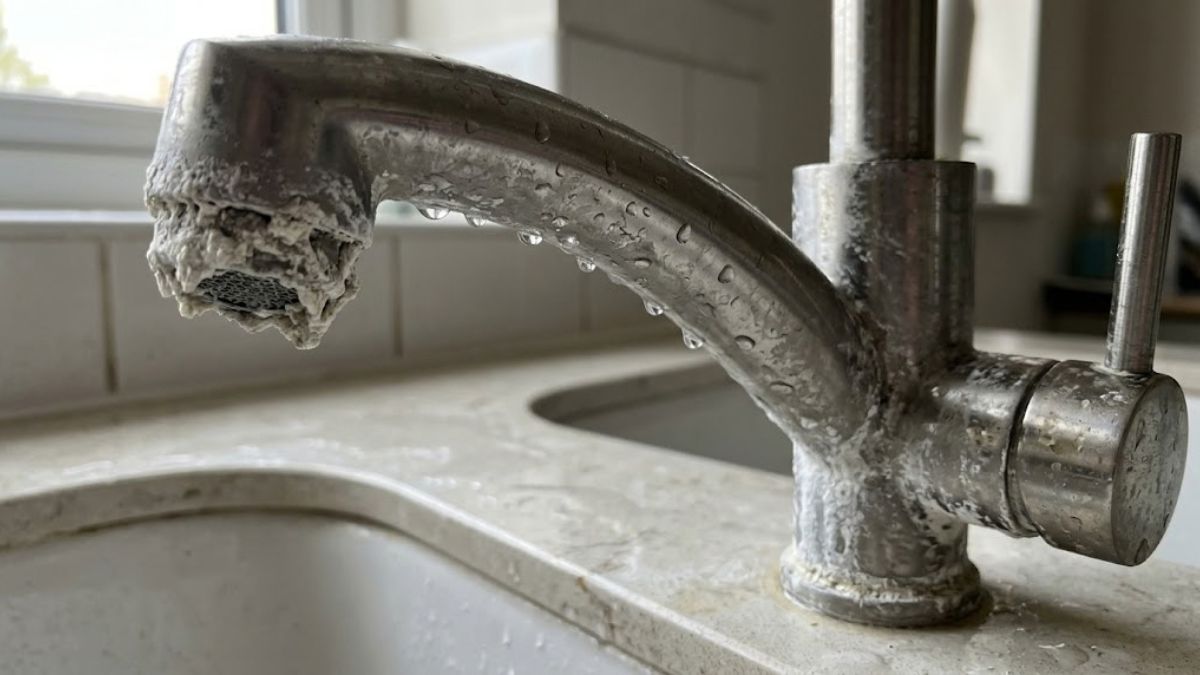
Westminster's tap water runs on the harder end for the Front Range because most of it comes from Clear Creek near Golden, delivered through the city's own Westy Water utility, and that source carries more dissolved calcium and magnesium than water pulled from a softer mountain reservoir alone.
What 'Hard Water' Actually Means
Water hardness is a measure of dissolved calcium and magnesium, and it's not a safety issue, hard water is perfectly fine to drink, but it does leave mineral deposits behind on anything it touches repeatedly: showerheads, faucets, the inside of a water heater tank.
Colorado's Front Range generally runs moderately to considerably hard depending on the exact source, and Westminster's mix of Clear Creek and Standley Lake supply sits toward the harder end of that range.
What Hard Water Does to Plumbing Over Time
Inside a water heater, mineral scale builds up on the tank's heating element and along the bottom, which is a big part of why tanks in hard-water areas fail sooner and make more popping or rumbling noise as they age than the same unit would in soft water.
Tankless units are even more sensitive to this, since scale narrows the small internal passages the unit depends on, which is why annual descaling matters more here than in a softer-water city.
Visible Signs Around the House
White or chalky buildup around faucet aerators and showerheads, soap that doesn't lather well, spots on glassware straight out of the dishwasher, and a slight film on skin after showering are all normal hard-water symptoms, not a sign anything is broken.
What to Do About Westminster's Hard Water
A whole-home water softener is the most effective fix, treating water at the point it enters the house rather than at individual fixtures. It's a real investment, but it meaningfully extends the life of a water heater and reduces the scale buildup that drives a lot of our tankless service calls.
Short of a full softener, regular descaling of a tankless unit and periodic vinegar soaks for showerheads and faucet aerators both help manage the symptoms without solving the underlying cause.
A Real Comparison Homeowners Notice
Residents who've moved to Westminster from a softer-water area, the Pacific Northwest or parts of the Midwest, often notice the difference within the first few months: dishwasher spots that won't rinse away, a film on shower glass that seems to reappear no matter how often it's cleaned, and a water heater that starts making noise sooner than the one in their previous home.
None of that means anything is wrong with the plumbing itself. It's a genuine, measurable difference in mineral content, and it's manageable once a homeowner understands what's actually causing it rather than assuming a fixture or appliance is defective.
Softener vs. No Softener: A Practical Decision
A softener is a real investment, typically $1,200 to $2,500 installed, and it's worth weighing against how much the hardness actually bothers a given household. Someone who's lived with it for years without issue may not need one. A household seeing repeated appliance problems or planning to install a tankless water heater has a stronger case.
We're glad to test your specific water hardness on a service visit rather than quoting a softener based on a citywide average alone, since even neighboring blocks can see slightly different levels depending on the exact supply mix.
Testing Your Own Water at Home
A basic hardness test strip, available at most hardware stores for a few dollars, gives a rough reading in seconds and is a reasonable first check before deciding whether a full softener conversation is worth having.
For a more precise number, we test hardness directly on a service visit using professional equipment, which matters since even a rough citywide estimate can miss meaningful block-to-block variation depending on the exact supply mix reaching a given address.
Living With Hard Water Without a Softener
Not every household needs or wants a softener, and there are real, lower-cost ways to manage hard water's effects. Regular descaling of any tankless unit is non-negotiable regardless of whether you install a softener, since scale accumulates on a schedule tied to actual water usage.
For showerheads and faucet aerators, an occasional soak in a vinegar solution dissolves mineral buildup effectively and costs nothing beyond a bottle of white vinegar and a few hours. For glassware and dishes, a rinse aid in the dishwasher meaningfully reduces the spotting hard water causes.
These habits don't eliminate hard water's underlying cause, but they manage the visible symptoms well enough that a lot of Westminster households reasonably choose to skip a softener altogether, especially in a smaller home with lower overall water use.
Whether hardness is a minor annoyance or a genuine problem worth solving comes down to your own household's tolerance and priorities. There's no universally correct answer, and we'd rather give you an honest read on your specific water and let you decide than push a softener on every visit regardless of whether it's actually needed.
It's also worth noting that hardness levels can shift somewhat over time as the utility adjusts its treatment process or source mix, so a household that tested their water years ago might find a different reading today. If it's been a while, a fresh test is a reasonable idea before making any decisions based on old information.
If you're still deciding, a straightforward hardness test at home is a low-cost, no-commitment first step that at least tells you where your specific water actually falls, rather than relying on a citywide generalization to make a household decision.
Hard water's effect by fixture
| Fixture | Typical hard-water effect |
|---|---|
| Tank water heater | Sediment buildup, shorter service life, popping noises |
| Tankless water heater | Scale in heat exchanger, needs annual descaling |
| Faucets & showerheads | Mineral buildup, reduced flow |
FAQ
Is Westminster's hard water safe to drink?
Yes. Hardness is a mineral content measure, not a safety issue, and Westy Water's supply meets all standard drinking water requirements. Hard water is a nuisance for plumbing and fixtures, not a health concern.
Will a softener fix my noisy water heater?
It slows future scale buildup significantly, but it won't remove sediment that's already accumulated in an existing tank. A tank already making noise from years of buildup may still need a flush or eventual replacement.
How much salt does a typical softener use?
A standard household system uses roughly one 40-pound bag every 4 to 6 weeks depending on household size, though usage varies enough by household that we'd rather check your specific setup than guess.
Does hard water affect drinking water taste?
Some people notice a slight mineral taste in harder water, though it's subtle and many residents don't notice a difference at all.
"Real answers, then a real plumber if you need one."☎ Call (303) 552-3896